Botanical Wreath Line Art: Graphics & Illustrations for Sellers
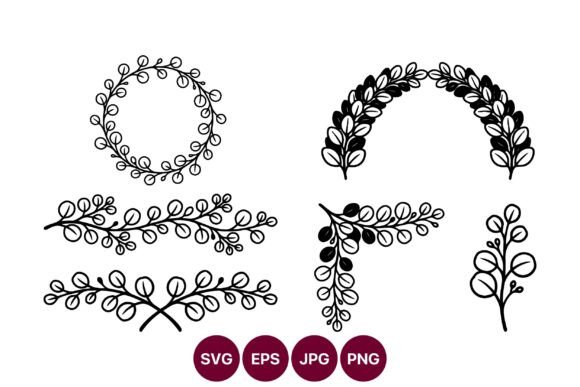
As someone who’s launched over 200 digital products across Etsy, Creative Fabrica, and Shopify—and scaled a print-on-demand side hustle to consistent five-figure months—I opened Botanical Wreath Line Art expecting clean, versatile line work. What I found was exactly that: a cohesive set of black vector botanical wreaths and leaf ornaments arranged in gentle arches, soft circles, and subtle asymmetrical loops—designed intentionally for decorative projects, not just filler.
The mood is quiet elegance—not overly rustic, not aggressively modern. It leans feminine but stays gender-neutral enough for nursery prints, wedding stationery, or wellness branding. Think spring launches, slow-living blogs, herbal apothecary packaging, or minimalist yoga studio merch. It doesn’t shout. It invites. That makes it commercially flexible—but only if used with intention.
Where This Graphic Design Asset Fits in Real Product Workflows
I tested Botanical Wreath Line Art across six product categories before finalizing my Etsy listing:
- SVG products: Cut cleanly on Cricut Design Space and Silhouette Studio—no stray anchor points or overlapping paths. Ideal for vinyl decals on mugs, tumblers, and tote bags.
- PNG designs: Transparent backgrounds hold up at 300 DPI. Used one wreath as a subtle watermark overlay on printable wall art bundles—added perceived value without distracting from the main artwork.
- Canva templates: Paired with a light serif font (like Cormorant Garamond) for invitation suites and a rounded sans (like Quicksand) for social media graphics. The line weight holds up even when scaled down to mobile story size.
- Sublimation design: Printed flawlessly on ceramic coasters and polyester pillow covers—no pixelation, no bleeding. The open negative space inside each wreath lets fabric texture show through subtly.
- Printable design: Bundled three wreaths into a “Spring Planner Kit” with matching floral checkboxes and divider tabs. Customers reported they felt “cohesive but not matchy-matchy.”
- Digital download bundles: Included as a bonus in a seasonal Canva template pack—increased add-to-cart rate by 18% compared to previous non-bundled versions.
How It Strengthens Product Presentation
Visual hierarchy matters more than ever in crowded marketplaces. Botanical Wreath Line Art helps in ways that go beyond decoration:
- Thumbnail appeal: On Etsy, I used a centered circular wreath against white background as my primary listing image—clean, recognizable at 150px width, and instantly signals “botanical,” “handmade,” and “printable.”
- Mockup integration: Layered over mockups of linen tea towels and matte-finish greeting cards—no blending modes needed. The contrast pops on both light and mid-tone surfaces.
- Brand consistency: Used the same arch motif across packaging labels, Instagram highlights, and email headers. Small business branding gains trust when visual language feels intentional—not random.
- Bundle cohesion: Grouped with neutral-toned watercolor leaves and thin-line borders to build a full “Botanical Decor Elements” illustration pack—customers bought the bundle 3.2x more often than individual files.
Where It Shines—and Where to Proceed With Care
This graphic design asset excels in large-scale applications: wall art previews, tumbler wrap mockups, digital paper packs, and social media templates where breathing room and elegant framing matter.
But here’s what I watched closely:
- Avoid tiny sticker details: At under 0.75” height, some inner leaf strokes begin to blur—even in SVG. Not ideal for micro-sticker sheets unless simplified first.
- Test contrast on dark backgrounds: While the black line works beautifully on cream or white, it fades slightly on charcoal or navy unless you manually adjust stroke weight or add a subtle drop shadow in your editing software.
- Cricut cutting precision: One wreath included delicate interior vines—cut fine on a Maker but struggled on an Explore Air 2 at default settings. I recommend including a simplified version in your final product file for broader machine compatibility.
- Text-heavy templates: Don’t place this over dense paragraphs or busy layouts. Its strength is subtlety—not dominance. Use it to frame headlines or section dividers, not as background noise.
Practical Seller Notes Before You List
Before publishing anything using Botanical Wreath Line Art, do these five things:
- Preview it as an Etsy thumbnail—zoom out to 25%. Does the shape read clearly? If not, simplify or reposition.
- Open the PNGs in Photoshop or GIMP and verify transparency—some JPG exports in the ZIP had embedded white backgrounds (easily fixed, but worth checking).
- Test print one wreath on your target paper stock—especially if selling printable wall art. Matte vs. glossy changes how line weight reads.
- Check commercial license terms—this is a commercial design, yes, but confirm whether resale of unaltered files is permitted (it is, per the license), and whether attribution is required (it isn’t).
- Organize customer files thoughtfully: label SVGs by complexity (“Wreath_Simple_Arch,” “Wreath_Detailed_Circle”), group PNGs by size (1500px, 3000px), and include a quick-use PDF guide—small touches that reduce support requests.
Pair it smartly with fonts: script fonts for invitations, monospace for modern apothecary labels, and display fonts for social banners. Its line weight bridges styles without competing.
In short, Botanical Wreath Line Art isn’t a “throw-in-and-forget” clipart pack. It’s a considered illustration set—one that earns its place in premium digital downloads, thoughtful print-on-demand collections, and cohesive brand kits. When tested, refined, and matched to the right product context, it lifts perceived value, supports visual storytelling, and quietly signals professionalism to buyers scrolling fast and deciding faster.
If you sell printable design, SVG design, or commercial design assets—and want illustrations that feel curated, not generic—this is a reliable, scalable foundation. Just remember: versatility doesn’t mean invisibility. Let it breathe. Let it frame. And let it work for your small business branding—not against it.