Jesus Loves This Mess Calligraphic
A Designer’s First Look: Warm, Worn-In, and Wonderfully Human
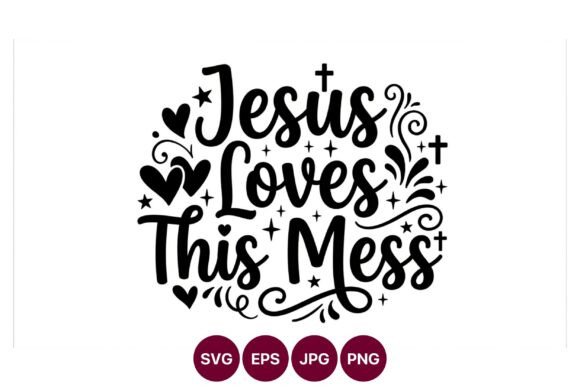
When I opened the Jesus Loves This Mess Calligraphic file set, I didn’t see just another faith-based graphic—I saw a mood. Soft black calligraphy, slightly uneven in rhythm, with gentle swirls looping around hearts and subtle crosses. Nothing stiff or overly polished. It breathes like a handwritten note tucked into a baby’s onesie or stitched onto a well-loved apron. The white background keeps it clean and versatile, but the real magic is in how the design *feels*: tender, unpretentious, and quietly confident. That tone matters—especially when you’re stitching something meant to comfort, celebrate, or personalize.
Where It Shines: Real Projects, Real People
I tested Jesus Loves This Mess Calligraphic on a linen-cotton blend tote bag for a local boutique’s spring collection. The phrase landed perfectly centered above the pocket—soft enough for moms carrying diaper bags, bold enough to read from three feet away. It also translated beautifully onto a lightweight cotton sweatshirt for a church youth group fundraiser. No crowding, no visual fatigue. The hearts and crosses aren’t fussy—they’re supportive accents, not distractions. That balance makes this design ideal for:
- Embroidered baby items (onesies, burp cloths, milestone blankets)
- Tote bags and tea towels for gift shops or Etsy listings
- Pillow covers and nursery decor where warmth matters more than flash
- Custom caps and patches—when simplified slightly for smaller hoop sizes
- Holiday embroidery, especially for Advent or Easter-themed handmade products
It’s not a “wow” design—it’s a “*ahh*” design. Customers pause, smile, maybe even touch the stitching. That kind of quiet resonance builds trust, especially for faith-based small businesses or personalized gift sellers.
What to Watch For: Stitching Smarter, Not Harder
This isn’t a plug-and-stitch file for every surface. The decorative swirls and fine letterforms demand attention before hooping:
- Small hoop sizes: The full layout fits best in a 5x7" hoop or larger. If you’re embroidering a cap front or baby bib, simplify—remove outer swirls or use only the central phrase.
- Fabric texture & stretch: On terry cloth towels or ribbed knit sweatshirts, stabilizer choice is non-negotiable. Use medium-weight cutaway under dense areas (like the cross stems) and test stitch density first—overly tight fills can pucker thin cotton.
- Dark or textured backgrounds: The black calligraphy relies on contrast. On navy or charcoal fabric, switch to white or ecru thread—and always check your printable mockup against actual fabric swatches. What reads clearly on screen may blur on fleece.
- Curved surfaces: Caps and curved pillow edges require repositioning the design so letter spacing stays legible. Don’t force the full swirl layout onto a rounded crown—it’ll distort.
Design Integrity in Action
What sets Jesus Loves This Mess Calligraphic apart from generic faith graphics is its intentional imperfection—the slight taper in strokes, the organic curve of the “J,” the way hearts nestle into negative space. That craftsmanship elevates the finished product. When stitched cleanly, it signals care—not just speed. That perception directly impacts perceived value: a $38 embroidered apron feels worth it because the design looks hand-drawn, not mass-produced. For Etsy sellers, that nuance helps listings stand out in search results for “Christian embroidery” or “personalized faith gifts.”
But don’t assume it works everywhere. On ultra-thin voile or sheer organza? Skip the dense fill stitches in the hearts—switch to satin stitch outlines instead. On layered garments like reversible jackets? Confirm the design won’t show through to the reverse side. And if you're using it for commercial embroidery (e.g., bulk orders for a ministry), double-check licensing terms—this is a digital embroidery file meant for physical output, not resale as a standalone graphic asset.
Practical Notes Every Embroidery Designer Should Run Through
Before cutting fabric or loading thread:
- Test Jesus Loves This Mess Calligraphic on scrap fabric *first*—same type, same stabilizer, same thread colors.
- Review stitch density in your embroidery software. Trim fill stitch density by 10–15% on lightweight fabrics.
- Inspect tiny details: the inner curves of hearts, cross joints, and terminal swashes on letters like “S” and “L.” Are they clear at your intended size?
- Check contrast in black-and-white mockups—especially if offering light/dark fabric options.
- Use proper stabilizer: cutaway for knits, tear-away for stable wovens, and fusible + tear-away combo for nap-heavy fabrics like fleece.
- Confirm whether your version supports both personal and commercial embroidery projects—some Illustrations and Graphics files carry usage restrictions.
Final Thought: A Design That Earns Its Place
Jesus Loves This Mess Calligraphic doesn’t shout. It settles in—like a favorite hymn hummed while folding laundry or a whispered prayer stitched into a hospital blanket. It’s not flashy, but it’s faithful in execution and feeling. For craft business owners, it’s a reliable anchor design: adaptable across product types, emotionally resonant without being cloying, and technically sound—if respected. Use it thoughtfully, test it thoroughly, and let its quiet sincerity do the work. Because sometimes, the most powerful embroidery isn’t about precision alone—it’s about presence.