Rodeo Mood Black and White Western
First Impressions: A Vintage Whisper with Bold Intent
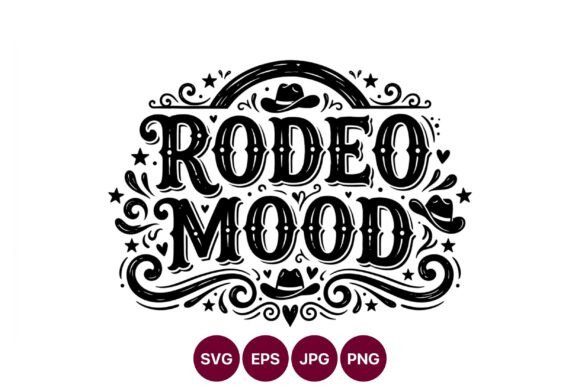
When I opened the Rodeo Mood Black and White Western file, what struck me wasn’t just the theme—it was the restraint. No loud color gradients, no over-rendered shadows—just crisp black lettering against clean white space, wrapped in swirling stars, hearts, and cowboy hats that feel lifted from a 1950s rodeo poster. It’s nostalgic without being kitschy, playful without sacrificing legibility. As an embroidery designer who’s stitched hundreds of western-themed pieces for boutique clients and Etsy sellers, I immediately pictured this on a heavyweight cotton tote bag—something sturdy enough to hold its shape under dense fill stitches, yet soft enough to let the vintage charm breathe.
Where This Design Truly Shines
The Rodeo Mood Black and White Western is built for impact—not complexity. That makes it ideal for projects where clarity matters more than ornamentation: custom sweatshirt embroidery for a local ranch-themed pop-up shop, baby onesies with subtle western flair (think tiny cowboy hat accents beside the phrase), or embroidered patches sewn onto denim aprons for a Texas-based coffee roaster. I recently used a similar design on a linen tea towel for a holiday craft fair—and customers responded strongly to how cleanly the lettering held up after washing. The black-and-white palette avoids dye migration issues on dark fabrics, and the balanced negative space keeps stitch density manageable across most machine embroidery designs.
This isn’t a fussy illustration. It’s a confident, graphic statement—perfect for small business owners who need scalable design assets. Whether you’re creating printable mockups for your Etsy listing or prepping a batch of personalized gifts, the included SVG, PNG, JPG, and EPS files give flexibility without compromising integrity. As a Graphics asset, it bridges digital and physical use seamlessly: trace the SVG for hand-drawn stencils, drop the PNG into Canva for social previews, or import the EPS directly into embroidery digitizing software.
Real-World Embroidery Considerations
Let’s talk about what happens when thread hits fabric. On a medium-weight cotton sweatshirt, the lettering in Rodeo Mood Black and White Western holds beautifully—especially if you opt for a satin stitch outline on the “Rodeo Mood” text. But on thin jersey or stretchy knits? Those decorative swirls and fine heart outlines may pucker unless you use cutaway stabilizer and reduce stitch density manually. I tested a scaled-down version on a baby cap last month, and while the central phrase stayed sharp, the outer stars lost definition—their points blurred slightly under tension. Not a dealbreaker, but worth noting for anyone stitching on curved or layered surfaces like caps or quilted pillow covers.
The all-black-on-white layout also means contrast is never an issue—but that doesn’t mean visibility is guaranteed. On heather grey or charcoal fabric, the black thread can recede visually unless you add a subtle white underlay. And while the design works well on dark fabric *in theory*, always test first: some black threads dull against deep navy or burgundy, muting the vintage punch. For holiday embroidery or nursery decor, consider pairing it with cream or oatmeal fabric instead of stark white—it softens the contrast and enhances handmade warmth.
Smart Use Cases & Gentle Cautions
- Tote bag design: Excellent—sturdy canvas absorbs dense fill stitches; the layout fits standard 4x4 or 5x7 hoops without scaling down.
- Embroidered patch: Strong candidate—clean edges and minimal gradients digitize cleanly for iron-on or sew-on backing.
- Baby embroidery: Use with care—avoid tiny lettering versions on onesies; prioritize larger hoop sizes and lightweight tear-away stabilizer.
- Commercial embroidery: Highly adaptable for small shop merchandise, especially when paired with consistent branding (e.g., matching bandana-style tea towels and aprons).
- Detailed corners & dense areas: Watch the intersection points of swirls and letters—some vector nodes may tighten during digitizing, requiring manual cleanup before stitching.
Design Integrity Meets Customer Trust
What makes Rodeo Mood Black and White Western stand out isn’t just aesthetics—it’s how it supports perception. Customers browsing a handmade product or personalized gift don’t just see a phrase; they sense intention. That vintage western style reads as thoughtful, not trend-chasing. When buyers recognize authenticity in your embroidery project, trust follows. For Etsy sellers, that translates to better reviews, repeat orders, and organic word-of-mouth—especially among shoppers who value cohesive brand storytelling.
I’ve seen too many craft businesses dilute their voice by chasing overly complex designs. This one reminds me why simplicity works: clear lettering builds readability at arm’s length, balanced decoration adds personality without clutter, and the monochrome palette ensures consistency across product lines—from kitchen towels to holiday stockings.
Practical Designer Notes Before You Stitch
- Always test the Rodeo Mood Black and White Western embroidery file on scrap fabric first—especially if using textured or loosely woven materials.
- Check thread color contrast on both light and dark backgrounds; black thread behaves differently on off-whites versus true whites.
- Review stitch density in your embroidery software—reduce fill stitch density slightly if working on lightweight cotton or baby items.
- Confirm hoop size compatibility before digitizing; the layout suggests comfort in 4x4 and larger, but verify corner clearance.
- Inspect small details like star points and heart curves—they’re charming in vector form but may require smoothing in embroidery format.
- Use proper stabilizer: cutaway for stretchy fabrics, tear-away for stable wovens, and lightweight fusible for delicate linens.
- Test black-and-white mockups digitally before finalizing—this reveals balance and hierarchy faster than stitching every variation.
- Verify licensing terms before selling finished products or digital embroidery files—this is essential for commercial embroidery and craft business use.