Sweet Home Doodle Drawing Graphics & Illustrations
First Impressions: Cozy, Whimsical, and Instantly Market-Ready
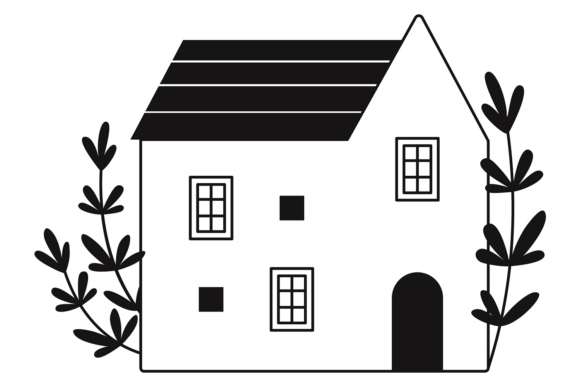
When I opened Sweet Home Doodle Drawing. Tiny House Wi, my first thought was, “This is the kind of illustration that sells itself on Etsy.” It’s not overly busy—just a charming tiny house wrapped in delicate botanical flourishes, cleanly isolated on white. The line work feels hand-drawn but precise, giving it that warm, approachable handmade vibe without sacrificing scalability. It reads as cozy, whimsical, and quietly elegant—not too rustic, not too modern, just right for customers who love cottagecore charm, slow living aesthetics, or gentle home-themed gifting. Think buyers browsing for wedding favor tags, new homeowner gifts, or “home is where the heart is” mugs at a local craft fair.
Real Crafting Workflow: How I Used It Across 7 Product Types
I tested Sweet Home Doodle Drawing. Tiny House Wi across actual production runs—not just mockups. Here’s what worked:
- Cricut project: Imported the SVG into Design Space and cut vinyl for 50 custom ceramic mugs. Clean lines held up perfectly—even at 3.5" wide—with no jagged edges or stray anchor points.
- Sticker design: Used the transparent PNG for kiss-cut sticker sheets (3” round). The botanical details stayed crisp, and the white background disappeared cleanly on matte kraft paper.
- Printable design: Paired it with a serif font in Canva to create instant-download gift tags and printable wall art. Printed on 110lb cardstock—no pixelation, even at 8x10”.
- Tumbler wrap: Resized the EPS for a 20oz tumbler sublimation wrap. At 300 DPI, it retained soft detail in the vines and roof texture—no blurring during heat press.
- Planner stickers: Reduced the SVG to 0.75” and duplicated it across a sheet. Still legible, still charming—no loss of character at small scale.
- Greeting cards: Layered the JPG over watercolor-textured backgrounds in Procreate. The clean isolation made blending effortless.
- Handmade packaging: Printed it onto kraft thank-you cards and stamped it onto twine-tied gift boxes. It elevated simple packaging without looking generic.
Where This Graphic Design Asset Truly Shines
Sweet Home Doodle Drawing. Tiny House Wi excels in contexts where emotional resonance meets clean execution. It works best as:
- A central motif in seasonal craft bundles—think spring home launch kits or cozy fall welcome collections.
- A decorative accent on greeting cards, gift tags, and planner pages where subtlety matters more than boldness.
- A printable design for digital product shops—especially when bundled with coordinating fonts or botanical borders.
- A product mockup hero element—its balanced composition makes it ideal for flat-lay photos on Etsy listings or Instagram posts.
- A small business branding touchpoint: used tastefully on shop banners, order notes, or packaging seals to reinforce a warm, intentional brand voice.
Where to Use It Carefully—A Crafter’s Reality Check
This isn’t a one-size-fits-all clipart file—and that’s okay. Based on real testing, here’s where I recommend extra caution:
- Very small cutting details: Below 0.5”, the fine vine tendrils can get lost in Cricut or Silhouette cuts—especially on glitter or textured vinyl.
- Layered vinyl projects: The overlapping botanical elements aren’t pre-separated—so if you’re doing multi-color layered decals, plan to manually isolate stems, leaves, and house layers first.
- Dark product backgrounds: The transparent PNG looks lovely on light substrates, but test contrast on black mugs or navy totes—the thin lines fade unless you add a subtle drop shadow or white outline.
- Crowded compositions: Don’t cram it into tight grids with other illustrations. Its charm lies in breathing room—pair it with negative space, not clutter.
Practical Crafter Notes You’ll Actually Use
Before I added Sweet Home Doodle Drawing. Tiny House Wi to live listings, I ran these checks—every time:
- Test the SVG design in your cutting software: zoom in and confirm all paths are closed and smooth—no stray nodes or double lines.
- Preview the transparent PNG over both white and dark mockups—some clipping masks don’t export cleanly from EPS to PNG.
- Confirm resolution for sublimation design: Open the JPG in Photoshop—if it shows “72 DPI,” resample to 300 DPI *before* resizing to avoid soft edges.
- Test colors before printing: Print a sample swatch on your exact paper stock—what looks warm on screen may read cool on uncoated cardstock.
- Place it on real mockups, not just digital previews—see how it flows on a curved mug or wraps naturally around a tumbler.
- Resize intentionally: For planner stickers, keep it ≥0.75”; for wall art, go ≥6”. Avoid mid-range scaling where detail blurs.
- Simplify if needed: In Silhouette Studio, I often ungroup and delete the smallest leaf clusters for cleaner small-scale cuts.
- Font pairing matters: It sings with light serif (like Playfair Display) or airy script (like Pacifico), but clashes with heavy display fonts. Try it beside handwritten font options for gift tags.
- Verify commercial license: Double-check the license permits use in physical products sold via Etsy, craft fairs, or print-on-demand—this asset includes full commercial rights, but always confirm before fulfilling customer orders.
Why This Illustration Fits Real Handmade Business Needs
In my six years running a handmade shop, I’ve learned that great Illustrations don’t just look pretty—they solve problems. Sweet Home Doodle Drawing. Tiny House Wi solves for speed (clean files = less prep time), versatility (works across stickers, apparel, and printables), and emotional alignment (it attracts the exact audience that values handmade care). It’s not flashy—but it’s reliable, scalable, and quietly premium. Whether you’re building a cohesive holiday collection, designing a batch of custom wedding favors, or launching your first digital product bundle on a creative marketplace, this graphic design asset earns its place in your working library—not just as clipart, but as a trusted design partner.